Call for an Appointment:
541-746-7142
Eugene, Oregon
541 342 3941
541 342 3941
Springfield, Oregon
541 746 7142
541 746 7142


How your Air Conditioning Works
Air Conditioning problems? Contact us with any questions, Wayne's Garage can Service or Repair your Auto A/C system.
Your car's Air Conditioning system.
Good A/C Performance and Maintenance saves Money
Too much or too little refrigerant in your Air Conditioning system is a major cause of A/C compressor failure and it can also waste fuel.
 The proper amount of refrigerant in the system is very critical to A/C operation. Running the system low on refrigerant causes compressor failure as the system lubricant flows with the refrigerant. Low refrigerant flow means poor lubrication. If your A/C system works but just doesn't seem cold enough, it is a good idea to get it looked at sooner than later.
Today's air conditioning systems do not have a way to visually check the refrigerant level and the only accurate way to get the proper amount into the system is to recover the refrigerant, measure it and then put the proper amount back in.
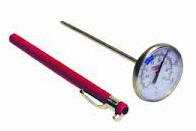 One way to see how well your A/C system is performing is to measure the outlet temperature at the vent with an accurate thermometer with a probe that will go into the vent. Drive the car with the A/C on max or recirculate. With temperatures well into the 80's Fahrenheit, the outlet temperature should be around 35 to 45 degrees. This temperature should not change much when the engine is brought back to idle.
The outlet temperature can very depending on the car's system, the outside temperature and humidity. The A/C system needs to keep evaporator (the component that cools the air as it goes through it) from getting below 33 F as that would cause the evaporator to freeze up and not allow air flow.
While this is a good test to see if the A/C is functioning, it doesn't necessarily mean it is not low on charge. A system only half full of refrigerant can still cool well in the 70 - 75f degree range but be almost useless at 85 - 90f degrees. So if you do the test at 75 degrees it doesn't mean it will work properly at 80 or above.
Many times when the A/C system isn't working well, someone may add more refrigerant by just "guessing" by when it seems to be working fine. It is easy to get too much in at this time which causes higher pressures and heat, which causes mileage loss and eventual compressor failure.
Other things that can cause air conditioning performance problems are not running in "recirculate" in hot weather, cooling fan problems, debris in front of the radiator/condenser and heater control problems.
We recommend having the system evacuated and refilled every 3 - 4 years, as even a system with no visible leakage may lose a little every year.
To see if your A/C system is performing, measure the outlet temperature at the vent with an accurate thermometer. Drive the car with the A/C on "max". With temperatures in the 70's to 80's Fahrenheit the outlet temperature should be around 35 to 48 degrees.
R134yf
Some cars made after 2014 use another refrigerant called R134yf, which is a synthetic HFO refrigerant and a successor to R134a for automotive air-conditioning applications.
Its global warming potential (GWP) is ultra-low, with a rating of less than 1. This means that one kilogram of R1234yf released to atmosphere has a significantly lower greenhouse effect than a kilogram of carbon dioxide. The cost for this refrigerant is about 5 times more than R134 and requires special equipment to recharge so it is important to keep it leak free.
R12
Air Conditioning systems before 1994 used a freon called R12 which was found to be harmful to the ozone. Most of these cars can be retrofitted to use R134. The correct way to do it is to remove and drain the oil in the compressor, replace the accumulator or drier and flush the old oil out of the system as it is not compatible with R134a.
You can just replace the accumulator or drier, skip the flush and oil drain and recharge the system but efficiency may not be very good. With changing to R134 you also need to refill the the system with R134 compatible oil also as the mineral oil used with R12 will not flow with R134 and will just pool in different areas and be useless.
