


Buying a New Battery
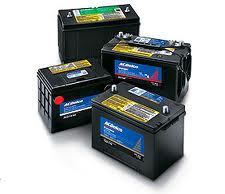
Before buying a new battery check your owner's manual or the battery guide where you are buying the battery for the original equipment manufacturer's (OEM) minimum requirements needed for your car and select the battery that is at least equal to that or better.
Batteries are rated by cold cranking amps (CCA) which indicates its power and reserve capacity (RC), which indicates how long your car's accessories can run and still have enough power to start the engine.
The Reserve Capacity rating is as important of a consideration when buying a battery as CCA. This is because of the effects of an increased parasitic (key off) load and in emergencies. Reserve Capacity is the number of minutes a fully charged battery at 80 degrees F (26.7 degrees C) can be discharged at 25 amps until the voltage falls below 10.5 volts.
More RC is better in every case! In a hot climate, for example, if your car has a 360 cranking amp requirement, then a 400 CCA rated battery with 120 minute RC would be more desirable than one with 1000 CCA and 90 minutes of RC.
Vehicle electronics draw down the battery when the car sits. A higher RC can really make the difference on whether your car starts when you leave it somewhere for 3 or 4 days, especially when it is a few years old.
Unfortunately the reserve capacity information is not always posted on the battery, which makes it harder to compare batteries. You may have to ask for that specification from where you are buying it. Another indicator of reserve capacity is the weight and warranty. The more Reserve Capacity, the longer the battery will last and the more lead in the battery. Look for an RC rating of at least 90. Batteries are 99% recyclable and are filled with lead and acid. Please recycle your batteries!
If your car has a security radio make sure you have the code handy before disconnecting the battery in case it goes into lockout. When installing your battery make sure the battery tray and cable ends are clean. Connect the positive terminal first and then the negative, be very careful to get the cables on the correct post or electrical damage will most likely occur. Always install the battery hold down, not only will it keep the battery where it belongs in case of an accident but it will lengthen battery life by cutting down on vibration.

Serving Eugene, Oregon and Springfield, Oregon's car, truck and SUV auto repair needs since 1973.
Integrity, Quality and Unmatched Service.