


Anti-Lock Brake Systems (ABS)

Before the development of ABS, drivers were taught to "pump" their brakes, especially on wet, icy, or other slippery road conditions. What makes ABS significant is that it does the pumping for you. ABS uses electronic controls to maintain wheel rotation when braking hard -- a situation that might otherwise lock a vehicle's wheels. Keeping the wheels rotating increases the steering and braking ability, especially when tire/roadway friction is reduced, such as when the pavement is wet.
The ABS module monitors the speed of the wheels, and if it detects one or more of them slowing down more than the others while braking, it will reduce the braking force on that wheel until the wheel starts turning again to allow vehicle control.
The ABS Light will come on if the ABS module detects a problem in the ABS system. When this happens the module will usually disable the anti-lock system and allow the brakes to operate normally as a system without ABS.
Feel your ABS. If your car or truck is equipped with an Anti-lock Brake System it probably spends most of it's time quietly monitoring your braking and out of mind. It's a good thing if you do not have to rely on this system frequently for stopping, but it should be something you're somewhat familiar with and not completely forgotten.
A panic situation is no time to be learning something new, but that's what often happens when a person who has not experienced their ABS system at work needs to brake suddenly and hard. Different characteristics can be encountered from one vehicle to the next, but some of the common things experienced are:
Normal braking followed by a feeling of no brakes at all for a few seconds.
Sudden jerking of the pedal, almost like you're getting a severe foot massage.
Pedal suddenly dropping down lower to the floor.
Noises that sound like your brakes are coming apart under your foot.
It is not unusual for a person feeling this for the first time to take their foot off the pedal, which doesn't help their situation. Proper braking with an ABS system is to keep your foot on the pedal and don't pump or release the pedal as we were taught to do on non-ABS equipped cars. It is not a bad idea to "experience your ABS at work" once in a while to get acquainted with it. The best place to do this is an empty and icy parking lot, but this is not always available unless you live north of the Arctic Circle. An alternative is an empty gravel lot or open gravel road. At about 15 miles an hour, try to lock up the brakes. Your ABS should show itself at this time and give you an idea what you might experience in an emergency situation. It certainly doesn't hurt to exercise the ABS system once in a while anyway.
There are times when you might experience ABS operation in normal driving on dry pavement, such as coming down a steep hill and coming to a stop, especially if there is any gravel or debris on the road.
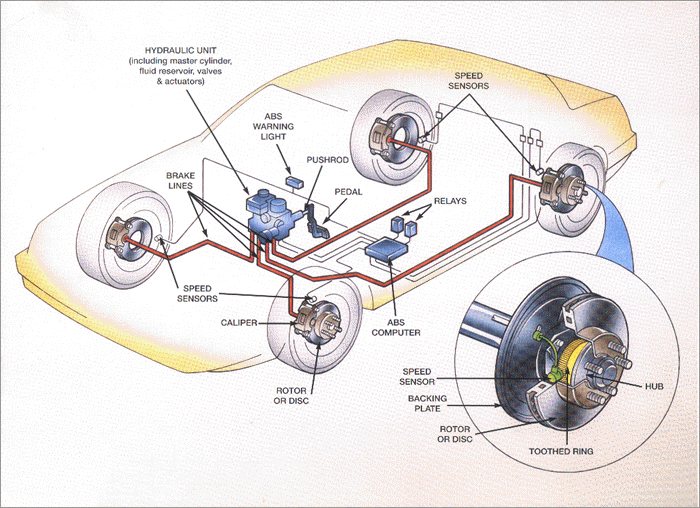 Simple ABS configuration
Wayne's Garage
Auto Service for Eugene and Springfield
333 Q Street in Springfield