


Extended Auto Warranty/Auto Service Contracts
A Vehicle Service or Mechanical Breakdown Contract (MBI) to cover break downs after your warranty runs out can be a good idea, especially if you plan on keeping your car a long time or take out a longer-term loan to finance the car.
It can easily cost over $1,000 to replace a vehicle's integrated computer unit or repair the air conditioner. In addition, manufacturer's warranties are based upon defects in material and workmanship and do not cover normal wear-and-tear.
If you plan on only keeping your new car for 4 or 5 years and don't put more than 20,000 miles a year on your car, a service contract may not be beneficial.
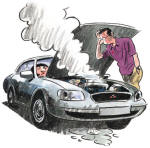
Why should a consumer buy a service contract if a car comes with longer - term protection, such as a extended powertrain warranty?
An extended powertrain warranty generally covers parts of the engine and transmission for five years and/or 100,000 miles. However, there are over 10,000 components on a vehicle and the powertrain components compose only a fraction of these parts. A powertrain warranty does not cover steering, electrical, suspension, air conditioning, heating, fuel systems, brakes, and convenience packages such as a navigation system.
What are the consumer's responsibilities?
Thoroughly read and understand the terms of a motor vehicle service contract. Many service contracts require certain maintenance schedules. If something later goes wrong and you cannot prove that the services were performed, the company might deny your claim (even if the service had nothing to do with the needed repair).
If there is an engine failure, not only will they check your service records, they may want to examine the engine oil pan and pump inlet for signs of sludging or lack of service.
You will want to keep detailed records, including receipts, to prove that the vehicle was properly maintained. Securely file any signed contract(s) and store documents in a safe location where they can be retrieved easily as needed.
When deciding whether to purchase a service contract, consider the following questions:
What is the difference between the coverage under the warranty for the vehicle and the coverage under the service contract? Most vehicles come with at least a 3-year or 36,000-mile warranty.
What repairs are covered?
Who pays for labor? Who pays for parts?
Who performs the repairs? Can repairs be made at an independent repair facility?
What are the cancellation and refund policies?
What is the deductible? By raising the deductible from $50 to $100, you may save hundreds or thousands of dollars on the cost of the service contract.
What are the options? Some contracts will have a basic coverage and for a little more an extended coverage which can be a much better buy when an electronic or other expensive component not covered on the basic coverage fails.
Only buy from reputable companies.
Check out the name of the company appearing on the contract. This company is often a third-party administrator that handles claims when breakdowns occur. Ask for references and check the company out with the Attorney General's Office and Better Business Bureau.
Search for reviews and see if what people are saying about them. With some of these companies, such as the ones listed below you may find no one happy with them when they have had a problem.
Carefully review the contract before purchase. A reputable company should allow you to review the contract before you buy it. Remember that sales brochures are not contracts. Review the contract before you buy it or make a deposit on it.
Regardless of what you may be told, few service contracts cover all repairs. When reviewing the contract, pay particular attention to the "exclusions," or those things the contract will not cover. The exclusions are usually listed near the back of the contract. Be wary of exclusions that may deny coverage for any reason. According to the Federal Trade Commission (FTC), examples of these exclusions may include the following:
If a covered part is damaged by a non-covered component, the claim may be denied, or If the contract specifies that only mechanical breakdowns will be covered, problems caused by "normal wear and tear" may be excluded.
Usually, the contracts that list what they don't cover are better, as that means everything else is covered and you know up front what to expect. If they only list what they cover there is going to be a lot of things not covered that you may not think of until they fail.
When comparing policies, the term "bumper to bumper" doesn't make them equal. That is just a general classification that means a coverage policy meets certain minimum standards. It doesn't mean that a bumper to bumper policy from one company will cover the same parts as a bumper to bumper policy from another company.
Determine whether the contract has any deductibles and carefully review how those deductibles apply. For example, a contract may have a $100 deductible for each repair or for each component repaired. You could pay several hundred dollars in deductibles if you had several things repaired at the same time on some policies.
Find out if you need prior authorization from the contract provider in order to have repair work done on your vehicle. People have been denied reimbursement for repairs because they did not get prior authorization before having repairs performed.
Buying a plan from a dealer doesn't mean it will necessarily be a good plan for your car. They tend to offer policies that make the highest profit for them and not the best coverage for you.
You may be able to negotiate the price of service contracts purchased through car dealers, just as you would negotiate the price of a car or trade-in vehicle.
The majority of these companies we have dealt with have honored their contracts and are easy to work with but some of the policies have not covered enough items to make the policy worth the money.
On major repairs, such as a bad engine the warranty company may may research the cheapest way it could be fixed, even if it is not a repair a reputable repair shop would perform and only pay that amount. This could end up costing the customer a lot more than the deductible to get a dependable repair.